 Service
 India
India UAE
UAE Store Locator


Strength Training at Home Without Weights
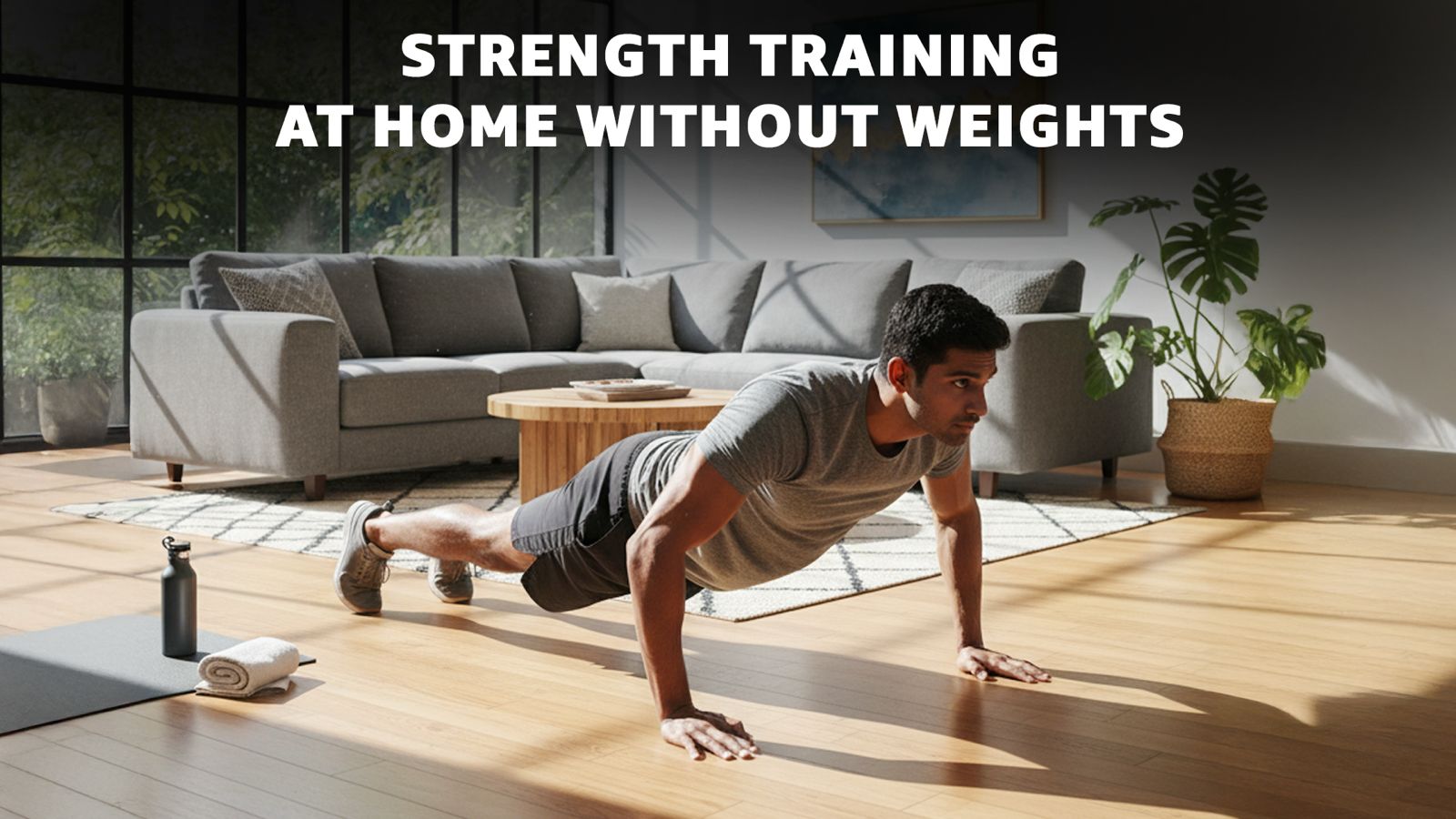
Let’s be real: we’ve all had those days where the gym feels too far away, or maybe you're just starting out and aren't ready to invest in a full rack of dumbbells yet. In 2026, the "no-equipment" movement is stronger than ever. At PowerMax Fitness, we believe that the most effective tool for building strength is one you already own; your own body.
You don't need a room full of iron to get stronger, leaner, and more athletic. By using your body weight and a bit of gravity, you can transform your living room into a high-performance training zone.
Mechanical Advantage: If a regular push-up feels easy, putting your feet up on a chair makes it much harder. You're shifting more of your weight onto your chest and shoulders.
Tempo Training: Instead of rushing through reps, try lowering yourself into a squat for a slow count of five. This "time under tension" forces your muscle fibers to work much harder to stabilize your body.
The Push (Push-ups): Great for your chest, shoulders, and triceps. If standard push-ups are too tough, start with your hands on a kitchen counter.
The Pull (Doorway Rows): Pulling is tricky without equipment. You can stand in a doorway, grab the frame, and lean back, pulling yourself forward to engage your back muscles.
The Squat:The king of leg exercises.To make these more challenging, try "Bulgarian Split Squats" by resting one foot behind you on a sofa.
The Plank: The ultimate core builder. It teaches your body to stay rigid and strong, which protects your spine.
While you don't need weights to start, eventually you might want a single station that covers every muscle group. Many people transition from floor exercises to a home gym once they’ve mastered the basics and want to add guided resistance.
Rucksacks: Fill a backpack with books to add instant weight to your squats or lunges.
Towels: On a smooth floor, a towel can act as a "slider" for mountain climbers or hamstring curls.
Sturdy Chairs: Perfect for tricep dips or as a platform for step-ups.
If you find that you’re ready to take the next step and want to add a bit of variety to your cardio while building leg power, an elliptical cross trainer is a perfect low-impact addition that fits into any home setup without needing a full weight rack.
Quality over Quantity: Five perfect push-ups are worth more than twenty "half-reps" where your back is sagging.
Listen to Your Joints: Bodyweight training shouldn't hurt your wrists or knees. If it does, check your alignment in a mirror.
The 20-Minute Rule: You don't need a two-hour session. Twenty minutes of high-intensity bodyweight movements three times a week is enough to see a visible change.
You don't need a room full of iron to get stronger, leaner, and more athletic. By using your body weight and a bit of gravity, you can transform your living room into a high-performance training zone.
1. The Science of Bodyweight Strength
Building muscle is all about "progressive overload". Basically, giving your muscles a challenge they aren't used to. Without heavy plates, we do this by changing the angles of our movements or increasing the time our muscles stay under tension.Mechanical Advantage: If a regular push-up feels easy, putting your feet up on a chair makes it much harder. You're shifting more of your weight onto your chest and shoulders.
Tempo Training: Instead of rushing through reps, try lowering yourself into a squat for a slow count of five. This "time under tension" forces your muscle fibers to work much harder to stabilize your body.
2. The Core Four: Essential Movements
To get a full-body workout, you only need to focus on four main movement patterns. Master these, and you’ll see results faster than you think.The Push (Push-ups): Great for your chest, shoulders, and triceps. If standard push-ups are too tough, start with your hands on a kitchen counter.
The Pull (Doorway Rows): Pulling is tricky without equipment. You can stand in a doorway, grab the frame, and lean back, pulling yourself forward to engage your back muscles.
The Squat:The king of leg exercises.To make these more challenging, try "Bulgarian Split Squats" by resting one foot behind you on a sofa.
The Plank: The ultimate core builder. It teaches your body to stay rigid and strong, which protects your spine.
While you don't need weights to start, eventually you might want a single station that covers every muscle group. Many people transition from floor exercises to a home gym once they’ve mastered the basics and want to add guided resistance.
3. Turning Your Home Into a Gym
You’d be surprised how much "equipment" you already have lying around.Rucksacks: Fill a backpack with books to add instant weight to your squats or lunges.
Towels: On a smooth floor, a towel can act as a "slider" for mountain climbers or hamstring curls.
Sturdy Chairs: Perfect for tricep dips or as a platform for step-ups.
If you find that you’re ready to take the next step and want to add a bit of variety to your cardio while building leg power, an elliptical cross trainer is a perfect low-impact addition that fits into any home setup without needing a full weight rack.
4. Safety and Consistency
Since you aren't using external weights, it’s easy to get overconfident with your form.Quality over Quantity: Five perfect push-ups are worth more than twenty "half-reps" where your back is sagging.
Listen to Your Joints: Bodyweight training shouldn't hurt your wrists or knees. If it does, check your alignment in a mirror.
The 20-Minute Rule: You don't need a two-hour session. Twenty minutes of high-intensity bodyweight movements three times a week is enough to see a visible change.
-thumb.jpg)
-thumb.jpg)
-thumb.jpg)
-thumb.jpg)
-thumb.jpg)
-thumb.jpg)
-thumb.jpg)
-thumb.jpg)
-thumb.jpg)
-thumb.jpg)